
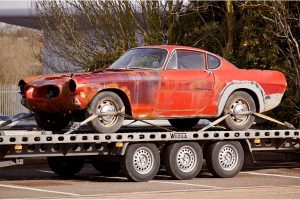
 Of course, you can ship a non-running car. Shipping a non-running car is absolutely possible – but there are a few important things to know so you don’t end up paying more than necessary. The key factor is how easily the vehicle can be loaded onto the trailer.
Some inoperable vehicles require heavy equipment, such as forklifts or advanced winch systems, to be placed on the carrier. These methods involve additional labor, longer loading times, and specialized equipment, which can significantly increase the total shipping cost.
That said, you can often avoid these extra charges if your vehicle meets a few basic conditions.
The 3 Things That Can Save You Hundreds of Dollars
If your non-running vehicle can do the following, shipping it is usually straightforward and much more affordable:
- Roll – The wheels must turn freely so the car can be pulled onto the trailer using a winch
- Steer – The steering must function so the driver can properly align the vehicle during loading
- Brake – The brakes should work well enough to secure the vehicle once it’s in position
When these three conditions are met, carriers can safely load the vehicle using a standard winch system, eliminating the need for forklifts or other costly solutions.
How Non-Running Cars Are Typically Loaded
- Winch systems (most common): Used when the car rolls and steers but won’t start
- Dollies or skates: Used if tires are damaged or brakes are locked
- Forklifts (rare): Typically only used at terminals and almost never for door-to-door pickups
What Is a Non-Running Car?
A non-running or non operable car is a vehicle that cannot be driven under its own power. This usually means the engine will not start or the vehicle cannot be safely operated on public roads. However, a non-running car may still be transportable as long as it can be loaded onto a carrier using equipment such as a winch.
Common reasons a car is considered non-running include mechanical failure, accident damage, electrical issues, missing parts, or long-term storage without maintenance.
Who Typically Needs Non-Running Car Transport?
- Car owners relocating who don’t have time or resources to repair the vehicle before moving
- People selling or buying used cars that are not drivable but still valuable
- Insurance companies handling accident-damaged vehicles
- Auto repair shops and dealerships transferring vehicles between locations
- Collectors transporting classic, project, or restoration cars
- Estate or inherited vehicle owners dealing with cars that haven’t run in years
Not All Non-Running Cars Are Alike
There are some cars that you just cannot ship. These cars, unfortunately, can’t make it on the trailer no matter how hard we try. Or they are hazards to other drivers on the road. This could be if your car is in the middle of a field or a hard to reach area like a crowded garage. If your car is like this, it might be best to test the roll, brake, and steer method. If you can roll your car to the curb, you can more than likely ship it. However, if it’s leaking fluid at an excessive rate, your car may be a hazard to other cars on the road. There may be nothing you can do. Shipping trailers won’t let cars go on a trailer if they’re going to ruin the trailer. It’s best to try to patch these holes before you call your shipping company.
However, shipping companies ship non-running cars every day. For the most part, it’s not a problem. You just need to make sure you’re dealing with a reputable and experienced shipping company. Car Transport Chicago has shipped cars for over 16 years, and there’s nothing they haven’t seen. Their experienced drivers can accommodate almost any non-running vehicle. Give them a call today and see how easy it is to ship your vehicle today!