
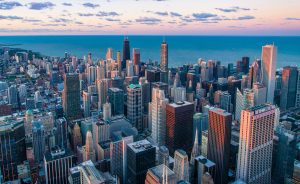
 Whether you are moving to Chicago or its surrounding areas, or just visiting and planning to do your own driving around the city, understanding how to navigate the streets of the Windy City can be a bit difficult. The city’s design and infrastructure are unique and different from a lot of other metropolitan cities, so driving here can look a bit different than elsewhere. Here are some things to remember or look out for when you hit the Chicago streets for the first time.
Chicago Traffic Overview
Driving in Chicago can be challenging, especially during peak hours. The city experiences heavy traffic on major highways such as I-90, I-94, and I-290, as well as on busy surface streets like Lake Shore Drive and Michigan Avenue. Morning and evening rush hours, typically between 7–9 AM and 4–6 PM, see the most congestion, so planning your trips outside these times can save a lot of stress.
One-way streets and frequent construction zones can also slow travel, so using a GPS or traffic app is highly recommended. Despite the congestion, Chicago’s grid system makes navigation straightforward, and many commuters find alternate routes or side streets to avoid major bottlenecks. Being aware of these traffic patterns helps both residents and visitors get around the city more efficiently.
Be Aware of Toll Roads
To some, these will not be anything out of the ordinary. But for some, like those from California, these may be a bit of a foreign sight. Toll roads are all around Chicago and the Midwest overall, so prepare to see them frequently. If you move to the city, you would greatly benefit from getting an I-Pass. This will automatically pay the toll as you drive through it. Otherwise, make sure you always pay your toll online within a week.
Anticipate Rush Hour
Rush hour in Chicago is around the same time as it is in most other cities. But still, if you are someone that is not used to rush hour, it can be unfamiliar. Rush hour tends to be between 6 a.m. and 8 a.m. in the mornings and 4 p.m. and 6 p.m. in the evenings.
Parking in Chicago
Parking in Chicago can be tricky, especially in downtown areas and near popular attractions. The city offers a mix of metered street parking, parking garages, and lot options, but spaces can fill up quickly during peak hours.
| Parking Type | Location / Example Areas | Typical Hours | Notes / Tips |
| Metered Street Parking | Downtown, Magnificent Mile, River North | 8 AM – 10 PM, Mon–Sat | Check signs for exceptions; use mobile apps to pay and extend time |
| Parking Garages | Loop, Near Willis Tower, Millennium Park | 24/7 | Secure option for long-term parking; prices vary by location |
| Parking Lots | Near Lincoln Park, Wrigleyville, Navy Pier | Varies by lot | Often cheaper than garages; may have hourly or daily rates |
| Residential Permit Parking | Neighborhoods like Lakeview, Logan Square | Varies | Reserved for residents; visitors need temporary permits or risk fines |
| Event / Special Parking | United Center, Soldier Field | Event hours | Rates can spike during concerts or games; pre-booking recommended |
Understand the Average City Driver
If you are not used to driving in major cities, Chicago city drivers may be a bit intimidating. They tend to be on the aggressive side and make maneuvers one may call unsafe. Because of this, you have to make sure you are a proactive driver. You want to assert yourself, but not succumb to the aggressive nature yourself.
Driving in Chicago requires awareness of local traffic rules and some unique city-specific considerations. The city has an extensive grid system, but many streets are one-way, so paying attention to signs is essential. Watch out for frequent construction zones and lane closures, which are common throughout the city.
Watch Out for Pedestrians and Cyclists
Driving anywhere you should be aware of pedestrians and cyclists but driving in a highly populated city full of tourists, you have to be extra cautious. Chicago is a bustling city where pedestrians and cyclists share the streets with vehicles, so extra caution is essential. Busy areas like the Loop, River North, and Navy Pier see heavy foot traffic, especially near public transit stops, parks, and popular attractions. Chicago also has an extensive bike lane network, and cyclists often use major streets such as Milwaukee Avenue, Ashland Avenue, and Dearborn Street.
Drivers should always yield to pedestrians at crosswalks and watch for cyclists when turning or changing lanes. During peak hours, especially near schools, office buildings, and cultural hubs, traffic can be unpredictable, making vigilance crucial. Being patient, checking mirrors frequently, and anticipating the movement of pedestrians and cyclists will help keep everyone safe while navigating the city streets.